
📽️ EUCAIM Releases Explainer Video
The European Cancer Imaging Initiative (EUCAIM) has released an informative explainer video that delves into the heart of the project. The video, tailored for both lay audiences and professionals in the health area, provides a concise yet comprehensive overview of EUCAIM’s goals and the transformative changes they aim to bring to the world of cancer research and care. It’s a glimpse into the exciting journey the project is embarking on to create a collaborative ecosystem where clinicians, researchers, innovators can work hand-in-hand to accelerate the development of innovative solutions for cancer care.
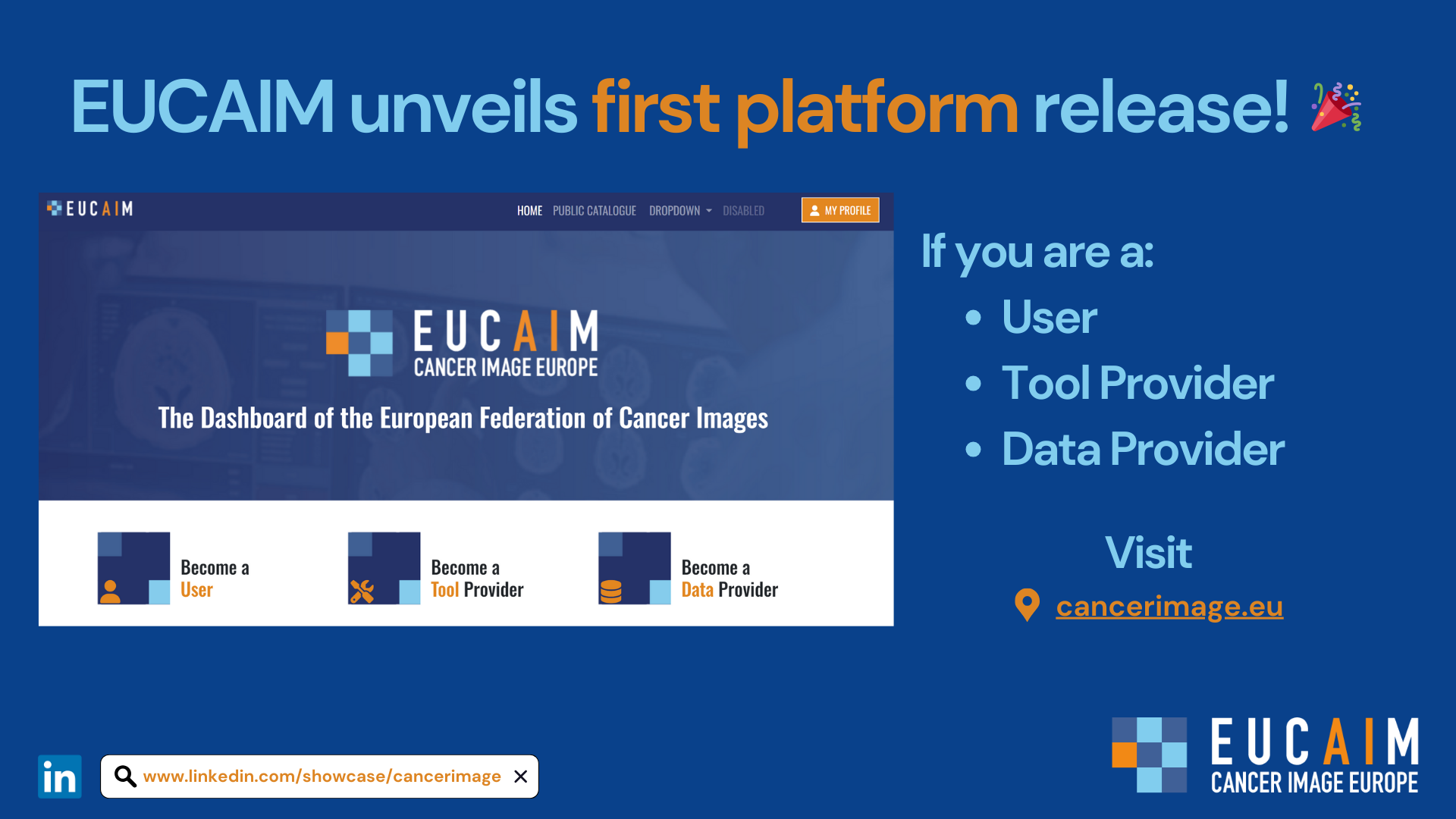
Along with the video, EUCAIM also proudly announced by the end of September, the first platform release. This milestone is a crucial step in the project’s mission to revolutionize cancer research. Experience the platform firsthand via our website: https://cancerimage.eu/.
Watch the video now and learn more about EUCAIM’s mission to reshape the future of cancer research!
Revolutionising Cancer Research: EUCAIM unveils first release of groundbreaking platform to fuel collaborative innovation and data sharing across Europe
September 29, 2023
Vienna, Austria – The EUCAIM consortium and the European Commission are excited to announce the first public release of its platform, Cancer Image Europe, marking a major milestone in the project’s development and an exciting step towards achieving its vision and goals. The first platform release brings benefits to researchers, clinicians and AI innovators across Europe and paves the way for the future of cancer diagnosis and treatment.
Key features and highlights of EUCAIM’s first platform release include:
- A public catalogue of cancer imaging datasets from the repositories of the EU-funded AI for Health Imaging projects, following a common metadata schema.
- A federated searching tool to understand the information available in the federated providers.
- Full integration with the Life Science Login Authentication and Authorisation Infrastructure.
- Reusing and adding value to key components of EU-funded research projects and infrastructure in the field of cancer.
Commenting on this milestone achievement, Ignacio Blanquer, leading the EUCAIM infrastructure development, says “this early prototype of EUCAIM is a proof of concept for the federation model pursued in EUCAIM. It will be the basis for a fully fledged infrastructure for sharing, reusing and exploiting cancer imaging data, especially using AI techniques.”
Prof. Luis Martí-Bonmatí, Scientific Coordinator of EUCAIM, adds that “this is the first step towards the set-up of the largest known-to-date cancer imaging infrastructure in Europe. Over the next months, the EUCAIM project will continue to extend the functionalities of the platform, linking to other research repositories, screening programmes and data warehouses towards its next upgrade, expected to be released in June 2024”.
By releasing the first version of Cancer Image Europe, sharing of cancer images and supporting clinical data is facilitated and collaboration between researchers, clinicians and AI innovators across Europe is stimulated. The platform aims to accelerate the pace of AI development and other data-intensive cancer research activities, thereby enabling and empowering scientific breakthroughs that will shape the future of cancer diagnosis and treatment. The project’s goals and vision contribute to the strategic objectives of the European Union’s initiatives and foster innovation and research.
With the Cancer Image Europe infrastructure, the EUCAIM project addresses the fragmentation of existing cancer image repositories. A distributed Atlas of Cancer Imaging with over 60 million anonymised cancer image data from over 100,000 patients will be established as part of future updates, and the infrastructure will be fully in alignment with the European Health Data Space. The data will be accessible to clinicians, researchers and innovators across the EU for the development and benchmarking of trustworthy AI tools.
The EUCAIM project is a cornerstone of the European Commission-initiated European Cancer Imaging Initiative, a flagship of the Europe’s Beating Cancer Plan, which aims to foster innovation and deployment of digital technologies in cancer treatment and care, to achieve more precise and faster clinical decision-making, diagnostics, treatments and predictive medicine for cancer patients.
For more information about the first release of the Cancer Image Europe platform and the EUCAIM project, please visit cancerimage.eu.
The European Commission and the UK reach political agreement on UK participation in Horizon Europe
Greats news! On September 7th, the EU and the UK have reached a political agreement on the UK’s participation in Horizon Europe.
As of 1 January 2024, U.K. researchers will be able to participate in Horizon Europe on a par with their EU counterparts and will have access to the scheme’s funding.
For more detail on this decision, read the press statement issued by the EC.
Professor Regina Beets-Tan appointed as New Scientific Director at EIBIR
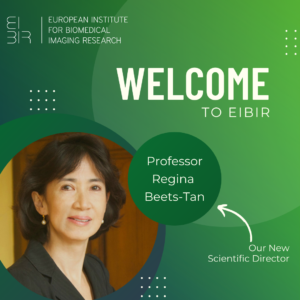
We are delighted to announce the appointment of Professor Regina Beets-Tan as the new Scientific Director of EIBIR. Professor Beets-Tan brings with her a wealth of knowledge and expertise that will undoubtedly contribute to further enhancing our organisation in supporting European biomedical imaging research and networking activities between institutes and disciplines.
Professor Beets-Tan’s profile and achievements speak volumes about her outstanding credentials and dedication to advancing the field of biomedical imaging research. She chairs the department of Radiology at the Netherlands Cancer Institute and is Professor of Radiology at the University of Maastricht, The Netherlands and adjunct Professor of Abdominal and Oncological Radiology at the University of Southern Denmark. Professor Beets-Tan is the former Chair of the Board of Directors of the European Society of Radiology (ESR), member of the EU mission board for cancer and of the board of the European Cancer Organisation. Her expertise in multidisciplinary research and collaborations will undoubtedly drive our work together.
We are thrilled to welcome her on board and eagerly anticipate the exciting new frontiers we will explore together under her visionary leadership.
Professor Beets-Tan pointed out that “multidisciplinary research in biomedical imaging is not merely a pursuit of knowledge but a catalyst for change. It’s through collaboration and bridging the gaps between disciplines that we can unlock the potential of biomedical research to move forward the field of precision medicine.” She further stated that “it’s with great honor that I assume the responsibility of leading this esteemed organisation. I am grateful for the opportunity to build further upon the outstanding work of my predecessor Professor Gabriel Krestin and guide EIBIR towards new horizons”.
We would also like to take this opportunity to extend our heartfelt gratitude and appreciation to our outgoing Scientific Director, Professor Gabriel Krestin. Over the past nine years, Professor Krestin has been instrumental in driving the growth and success of EIBIR. Under Professor Krestin’s guidance, our organisation has made remarkable advancements, positioning us as a leading entity in supporting scientists and securing funding for their projects.
Professor Krestin commented on his time at EIBIR: “I find it hard to say goodbye to EIBIR after 9 years as its Scientific Director and 8 years as Chair of the General Meeting of Shareholders before that. EIBIR was my “baby” and I leave it now in a stage of an almost “grown-up”. This growth would not have been possible without the engagement of the extremely talented EIBIR Team in our Vienna office under the guidance of Mrs. Monika Hierath. They are the body and the soul of EIBIR and I am happy that they will continue to support multidisciplinary collaborative research in biomedical imaging in Europe in the years to come.”
To Professor Kerstin, we extend our warmest congratulations on an incredibly successful 9-year term as Scientific Director. Your achievements and unwavering commitment have left an indelible mark on our organisation. The knowledge and inspiration you have imparted will continue to shape the future of our organisation’s endeavours.
SIMPLERAD project workshop programme, Dec. 11 & 12, Brussels
The SIMPLERAD project, conducted by a consortium of EIBIR, EANM Forschungs GmbH, and EFOMP, is a SAMIRA study on the implementation of the Euratom and the EU legal bases with respect to the therapeutic uses of radiopharmaceuticals. Since May 2022, the consortium has synthesised collected information and formulated a guidance document aiming for coherent implementation of the European legal requirements with respect to therapeutic nuclear medicine. Relevant interested professionals from European and national authorities, competent authorities, nuclear medicine, clinical communities, patient organisations, radiopharmaceutical industry, etc., are invited to attend and discuss the consortium’s achievements and draft guidelines.
More information, including an up-to-date programme, can be found on the project website. Formal invitations will soon be sent to target groups, but inquiries can be made to Nathan D. Peld of the EIBIR office.
Extension for abstract submission deadline for the European Radiation Protection Week 2023
📢 Attention! Abstract submission deadline for the European Radiation Protection Week 2023 has been extended to Sunday, June 11th at 23:59 CET.
Submit your abstract & register today:
🔗 https://ucd.ie/ERPW2023/
The European Radiation Protection Week (ERPW) is an annual, multidisciplinary event which brings together experts and addresses current and emerging topics related to radiation protection.
AI-POD Project Launches to Transform Obesity-Related Cardiovascular Disease Prediction with Advanced AI Tools

A groundbreaking EU-funded project, AI-POD, has been launched by a consortium of 11 partners from eight countries, with the ambitious goal of reducing cardiovascular disease (CVD) risks in the obese population through innovative AI-based predictive tools.
Over the course of four years, experts from various fields, including radiology, computational imaging research and industry, will collaborate to develop a state-of-the-art imaging-based AI risk score, a clinical decision support system (CDSS), and a mobile app for personalized risk assessment and prediction of obesity-related CVDs and their associated complications.
Obesity is a pressing concern in Europe, affecting more than 436 million people and leading to a 50% higher risk of CVD mortality. This epidemic results in an economic burden exceeding 210 billion euros per year. Current risk assessment methods are inadequate in terms of accuracy and practical application. AI-POD aims to tackle these challenges by integrating clinical, laboratory, and imaging data to translate disease risk into actionable health information that can guide diagnostic steps and treatment recommendations.
Professor Ulrike Attenberger, Director of Department of Diagnostic and Interventional Radiology at the University Hospital Bonn (UKB) is the coordinator of the AI-POD project, and expressed her enthusiasm: “With AI-POD, we are pushing the boundaries of clinical insight in cardiovascular disease management for obese individuals. Our goal is to develop trustworthy AI tools that will not only support clinical decision-making, but also empower patients and persons at risk to better monitor and manage their own health. By doing so, we aim to significantly reduce morbidity and mortality among obese individuals while also making a positive impact on public health budgets.”
The AI-POD project will be validated in six clinical sites and aims to establish a long-lasting interdisciplinary platform for distributed learning in other vascular areas. This innovative project will also create an ethical framework to address potential concerns regarding the new technologies, and evaluate their acceptability, social desirability, and user satisfaction.
The AI-POD project is poised to revolutionize the way obesity-related CVDs are predicted and managed, ultimately improving health outcomes for millions of Europeans.
More information on AI-POD: www.ai-pod.eu
This project has received funding from the European Union’s Horizon Europe research and innovation programme under grant agreement No 101080302.
Views and opinions expressed are however those of the author(s) only and do not necessarily reflect those of the European Union or the European Health and Digital Executive Agency (HADEA). Neither the European Union nor the granting authority can be held responsible for them.
EC calls for input on future EU4Health programme
The European Commission has launched a consultation on the EU4Health programme to help shape future work programmes!
Survey link here
Deadline: 8 May
This targeted consultation is intended to seek the opinion of stakeholders about current and future Union health priorities and strategic orientations and key health needs to be addressed through the EU4Health annual work programmes, providing inputs for reflection on the 2024 EU4Health work programme and beyond. Its results will be used for drafting a consultation report. They will also feed into the EU4Health stakeholders’ conference on 9 June 2023.
EU4Health, with a budget of €5.3 billion, is the fourth and largest of the EU health programmes. The EU4Health programme goes beyond an ambitious response to the COVID-19 crisis to address the resilience of European healthcare systems. The programme provides funding to national authorities, health organisations and other bodies through grants and public procurement, contributing to a healthier Europe. HaDEA manages the vast majority of the total EU4Health budget and implements the programme by managing calls for proposals and tenders from 2021–2027.
PIANOFORTE Open Call 2023 is now open!
The PIANOFORTE Partnership is pleased to announce the launch of its first open call for proposals to support research projects aimed at improving knowledge and promote innovation in the field of radiation protection.
This 1st call addresses 3 main topics:
Topic 1: Developing a knowledge base for a better understanding of disease pathogenesis of ionising radiation-induced cancer to improve risk assessment.
Topic 2: Individualised diagnostic as well as therapeutic procedures with regard to optimisation of the benefit/risk ratio.
Topic 3: Development of risk assessment and risk management approaches and technological capabilities to cope with scenarios arising from threats due to war or armed conflicts situations or natural disasters taking into consideration social, ethical and legal issues.
The main aim of this open call is to support transnational research projects that combine innovative approaches in the field of radiation protection in line with the research priorities of PIANOFORTE.
The call text, rules of participation, proposal template and guidelines for applicants are available here.
SAVE THE DATE
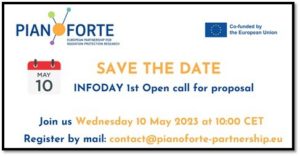
The Pianoforte Partnership will hold a virtual information session about its first call for proposal on May 10, 2023. Register by mail to receive the link to the webinar (contact@pianoforte-partnership.eu).
EURAMED rocc-n-roll will hold a Stakeholder Workshop
The EURAMED rocc-n-roll Consortium is pleased to announce a Stakeholder Workshop on May 25-26, 2023, in Brussels, BE, at the Thon Hotel Brussels City Centre. This workshop presents a unique opportunity to gather input and consultation from a wide range of stakeholders in the field, with the aim of developing a strategic research agenda (SRA) for the future of medical applications of ionising radiation and related radiation protection.
The workshop will be held over two days, from May 25-26, 2023, with an indicative timing of 11:00 on May 25 to 15:00 on May 26.
You can register for the workshop here.